BIRD COLLISION REPORTING
How to report a building or window collision
Human-made infrastructure—homes, buildings, industrial facilities, radio and cell towers—creates some of the biggest threats to birds due to the artificial light at night these structures emit and the reflective glass in windows or on exterior walls.
dBird.org—an NYC Bird Alliance and Birds Connect Seattle citizen-science project—allows anyone to report sightings of dead or injured birds in less than two minutes. This database helps to guide conservation and advocacy efforts—such as Lights Out Louisville—that aim to reduce human-made hazards to birds.
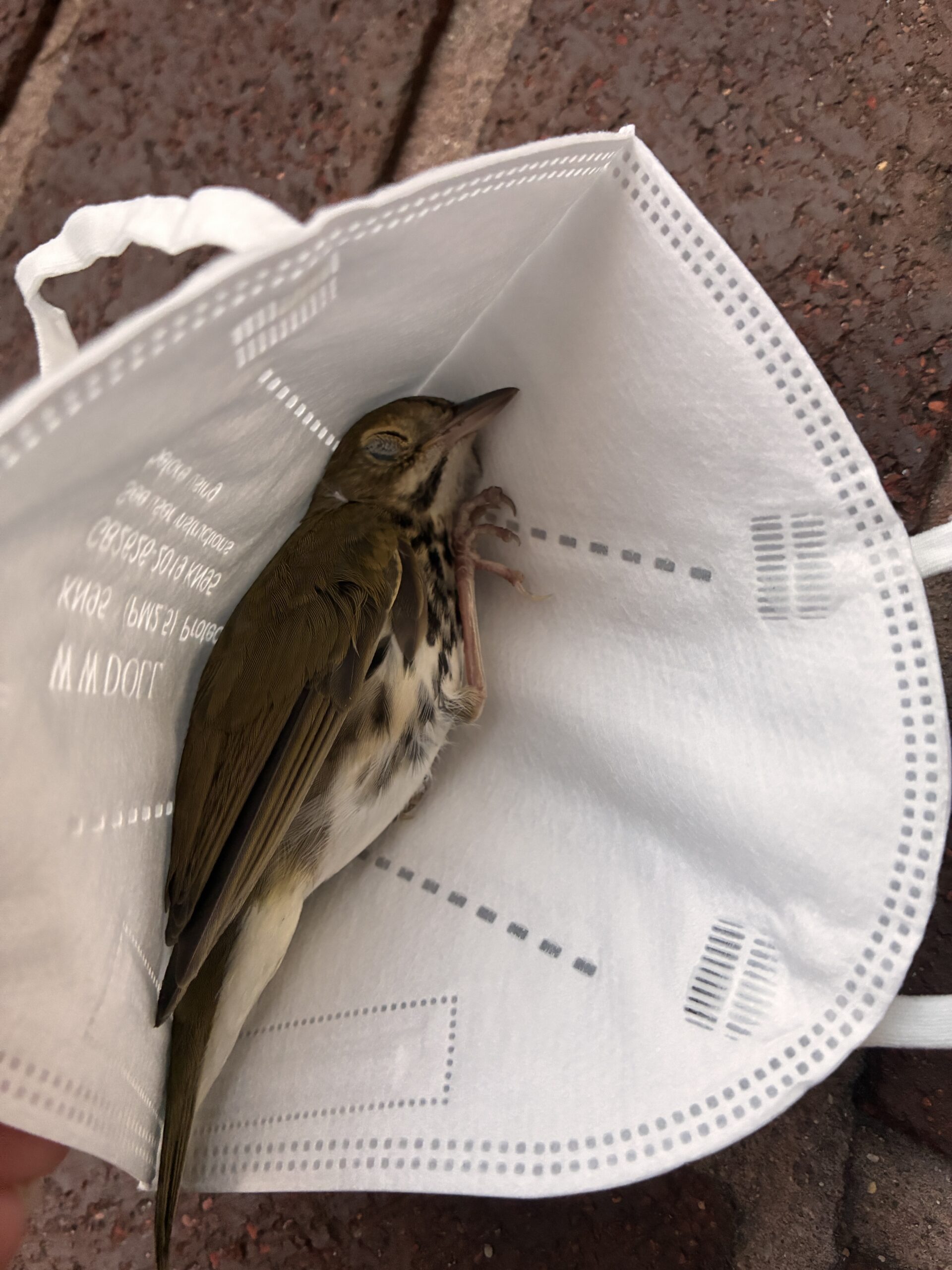
How to help an injured bird
When a bird survives a building collision, it needs a quiet, dark, safe place to rest and recover. If you find a bird on the ground near a building or home:
• If you find a sick or injured songbird in Kentucky, call Shively Animal Clinic, (502) 778-8317 open 24/7, 2401 Dixie Hwy Louisville, KY 40216.
• Note: Most KY rehabbers do not take injured songbirds (passerines). Shively is the only clinic we know of at the moment.
• Please call to say you’re bringing in an injured songbird. (If the receptionist says they do not take injured songbirds, please ask them to check with the vet.)
• When you arrive at the clinic, take the bird to the front desk to drop it off.
• If you find a sick or injured raptor or bird of prey in Kentucky, please call Raptor Rehabilitation of Kentucky Inc.: (502) 491-1939
• If you find an injured songbird in Indiana, please call songbird rehabber Rose: 812-949-8618
Click here for other wildlife rehab facilities.
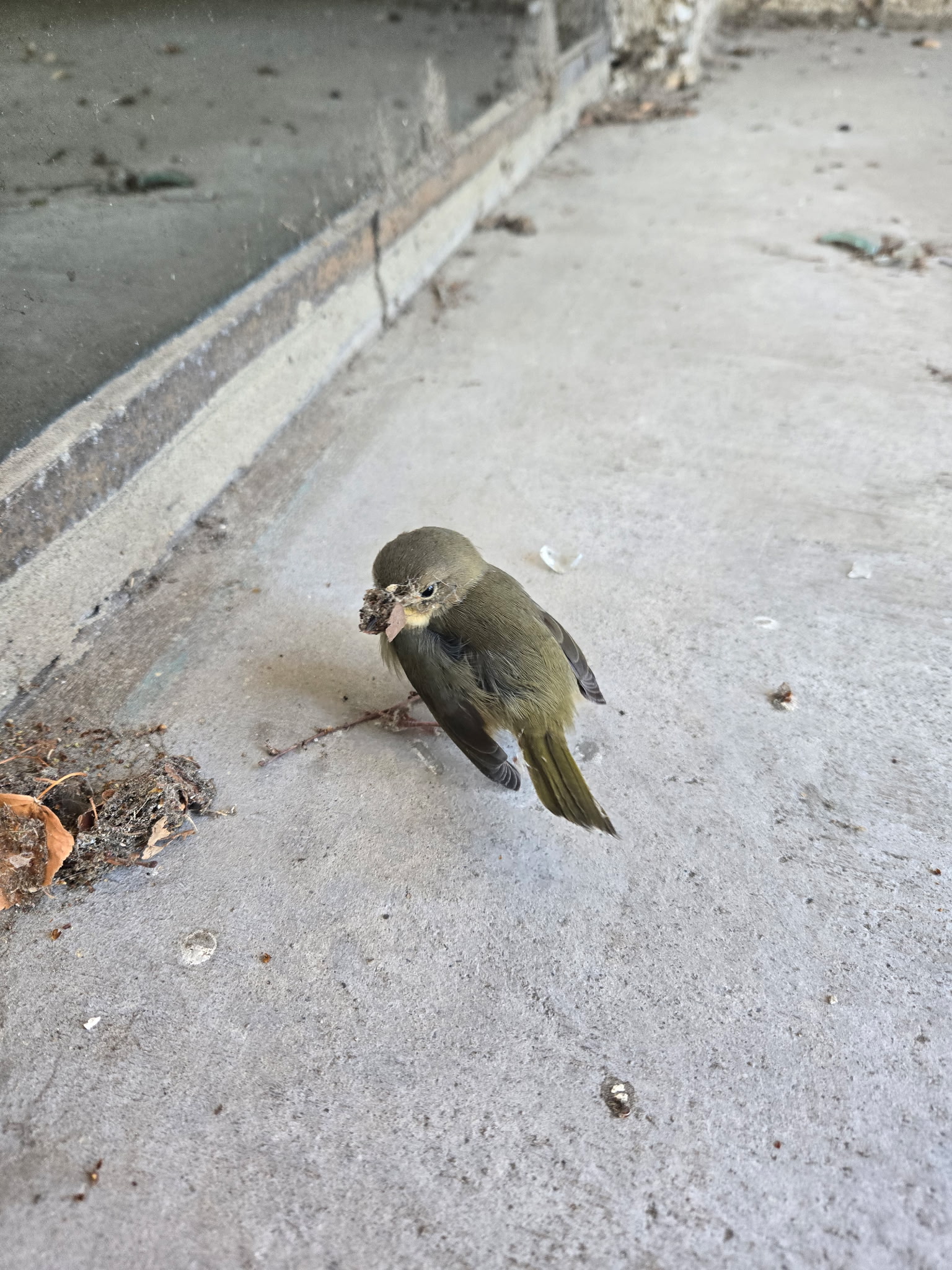
Important: Highly pathogenic avian influenza (HPAI) has been reported in Kentucky. Do not attempt to contain or handle birds with HPAI symptoms: swimming in circles; lethargic; unable or unwilling to fly; exhibiting head tremors; and/or moving in an uncoordinated fashion.
Kentucky Fish and Wildlife asks for reports of wild birds that exhibit HPAI symptoms. Learn how to report suspected avian flu.
CITIZEN SCIENCE
Your data at work
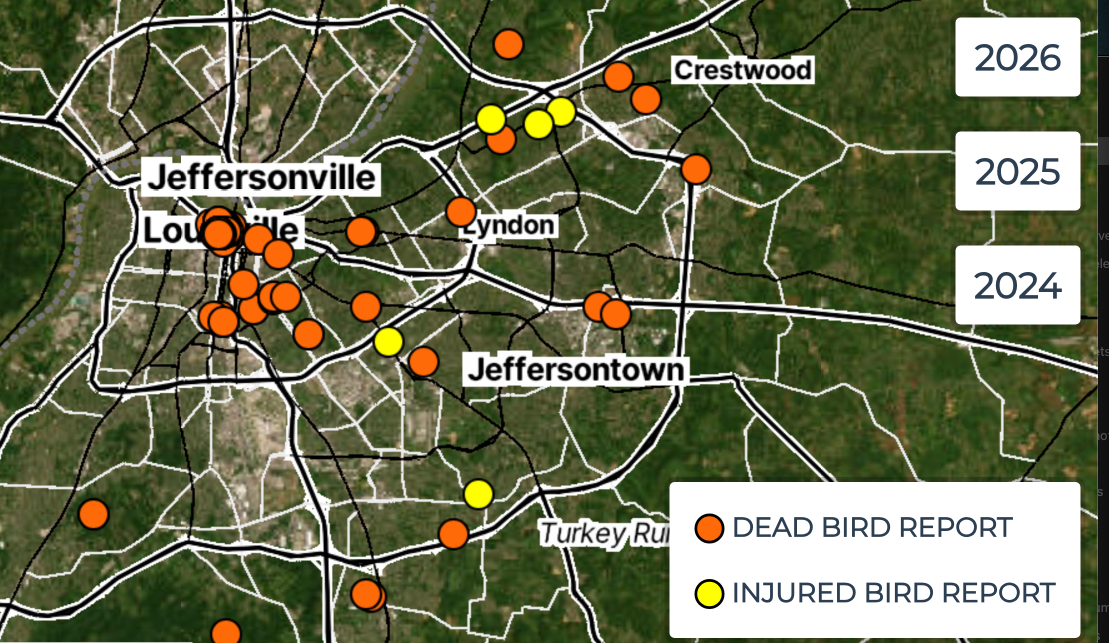
Click the image to see a live map—updated in real time—showing any dead or injured birds seen in Jefferson County and reported to dBird.org since 2024.
As with any citizen-science project, data quality and quantity depend on how many people report sightings and how often—so please use dBird.org to log any dead or injured birds you see.